02 / FINANCIAL RECONCILIATION · FULL STACK
ClearLedger
From order to bank deposit. Financial reconciliation with traceable imports, discrepancy detection and immutable reports.
The project
ClearLedger reconciles orders against charges and refunds, then checks net payouts against bank deposits. It turns validated CSV records into auditable reports and surfaces discrepancies for investigation.
What's implemented
- Atomic CSV imports with content hashes, idempotency and conflict detection.
- Matching of charges, refunds, fees, split payments and bank deposits.
- Detection of missing payments, amount differences, unknown orders and currency mismatches.
- Immutable SQLite import snapshots and reconciliation reports.
- Authenticated FastAPI endpoints, a CLI and JSON/CSV exports.
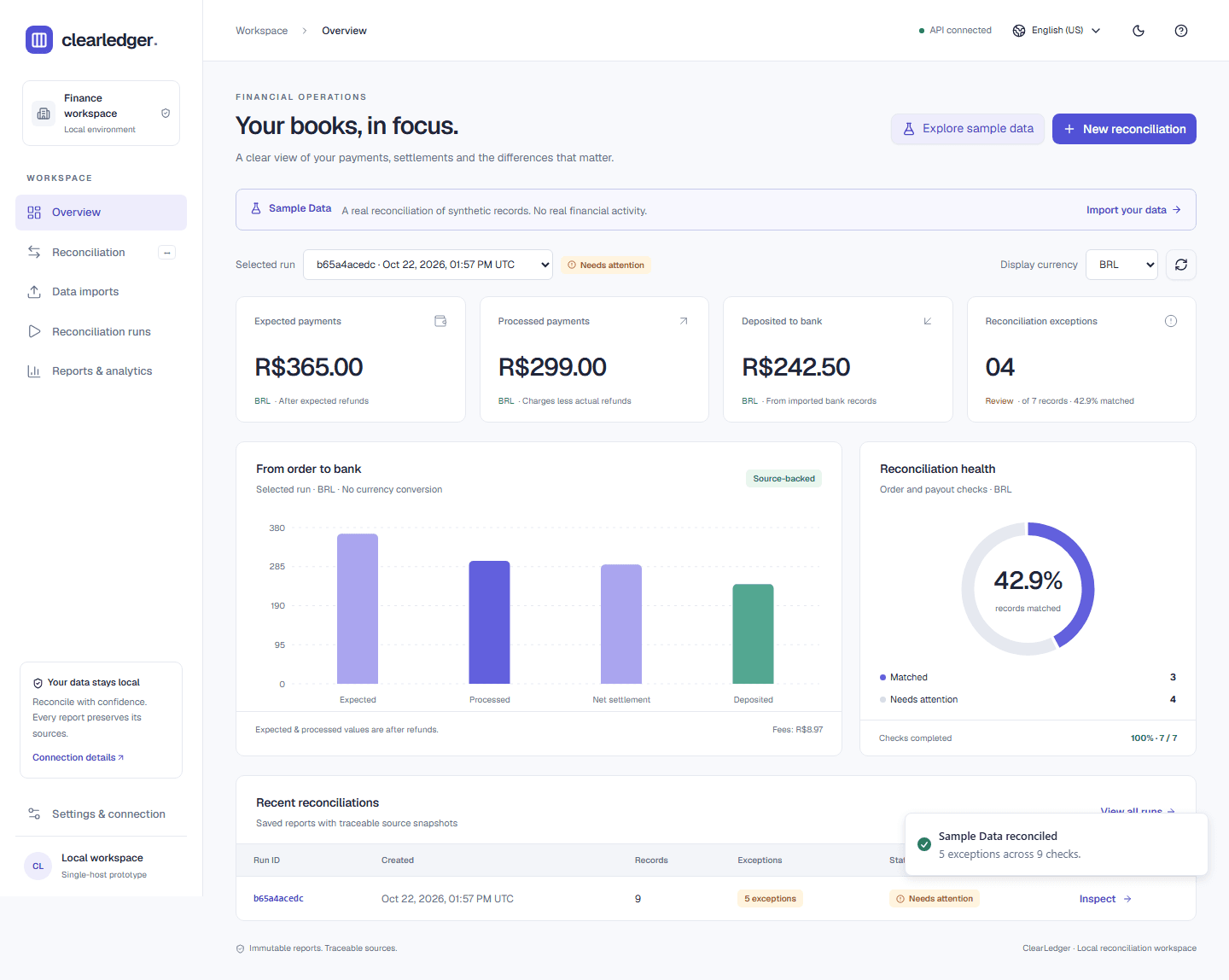
- A bilingual Next.js dashboard with filters, tables, run details and light/dark themes.
How it's built
Pure reconciliation rules are separate from CSV ingestion, SQLite persistence, the HTTP API and the CLI. Database transactions and triggers protect immutable reports. The Next.js frontend accesses FastAPI through a server-side layer; business endpoints require an API key.
My contribution
Personal project in Matheus Sulino’s vrascode repository, connecting reconciliation rules, persistence, API contracts and a dashboard for investigating exceptions.
Tests & verification
64 backend tests and 51 frontend tests passed on October 27, 2026. These include real Python/SQLite report generation, validation, immutability, conflicts, refunds and API behavior. A Starlette/httpx deprecation warning remains. Browser tests were not repeated in this source review.
Current scope
A single-host prototype. It does not move funds or connect to live banking infrastructure. The screenshots and examples use synthetic data; no commercial deployment is claimed.